

When the Map No Longer Matches the Road: Finding Meaning After Loss
Reading time: about 16 minutes. Take it slowly; there’s no rush here.
WHEN LIFE VEERS OFF SCRIPT
The map may be gone, but you are still on time.
For anyone whose life no longer looks like the plan: grief, longing, trust, intuition, plus where love goes next.
There’s a silence that follows when life veers from the story you thought you were living.
Maybe you’ve longed for a child, only to find your body resists conception. Perhaps a marriage dissolved after years of devotion, or a relationship ended with a finality you didn’t expect. It might be the loss of someone whose presence once defined your days. You may also be yearning for a relationship while the odds feel stacked against you.
Moments like these shatter more than your plans. They shake your sense of self. Not knowing why can test you more deeply than the loss itself.
If you’re here, I gently ask you to read until the end. Buried within the unravelling is pain, yes, but also possibility: learning to trust yourself again, to surrender to something greater, to sense divine timing at work even when you can’t see it.
Inside this article
- Why trust collapses after loss
- For anyone longing for a child, or grieving one
- Living with an empty chair after a partner is gone
- How grief blocks intuition, plus how to tell it from anxiety
- A stillness practice plus a breathing break
- Why blind optimism isn’t enough (my sister’s story)
- Where love goes when its old path closes
- Three words to say aloud when you feel lost
Never had a reading and curious about the tone, the boundaries, the care? Click here to read what to expect.
The Tarot Medium Newsletter
Free readings for every sign, new articles as they’re written, first word on new courses, the occasional surprise for subscribers only.
Curious how mediums sense spirit, or how the cards can open that door? Explore the online courses to learn at your own gentle pace.
Ready for a reading that meets you inside the ache? Click here to book one.
JUMP TO A SECTION
When life veers off script Trust after loss Longing for a child Losing a partner Grief plus intuition Intuition vs anxiety Stillness practice Beneath racing thoughts Self blame Softness as strength Breathing break Blind optimism Where love goes Keeping going
What Do You Do When Life Veers Off Script?
Meaning begins in the very steps you take forward
When the map dissolves, it’s tempting to stand still until a new one appears. Meaning rarely arrives that way. It tends to reveal itself one step at a time, often only in hindsight.
Psychiatrist Viktor Frankl, who survived the Nazi concentration camps, built an entire approach to therapy around this idea, called logotherapy. His conclusion: even when we can’t change our circumstances, we can still choose how we meet them.
When the map dissolves, meaning begins in the steps you take forward.
Why Does Trust Collapse After Loss?
Trust doesn’t only fracture in others; it falters inside us too

There are moments when trust collapses: trust in others, in yourself, in whatever force you believed was guiding it all. A dream of motherhood shatters. The marriage you thought would endure ends. Someone you love more than words is gone too soon.
You wake in a house that no longer feels like home, walking through days that no longer feel like yours. It’s natural to wonder whether life itself has turned against you.
Hear this: what you’re going through isn’t meant to destroy you. It’s asking you to soften your lens, even when all you want is to close your eyes against the ache.
Sorrow will tempt you to armour your heart so nothing can reach it again. There’s wisdom in retreating for a while, gathering yourself, letting the waves crash as they need to. Those walls can’t stay forever, though.
The walls you build for survival often keep out the love trying to reach you.
Left standing too long, they don’t only shield you from pain. They bar the door against the love, connection plus renewal still waiting for you.
If the weight feels like too much
Grief can tip into depression or thoughts of not wanting to be here. Readings are supplemental to therapy, never a replacement. Please reach out:
- Canada plus the USA: call or text 988
- UK plus Ireland: Samaritans, 116 123
- Australia: Lifeline, 13 11 14
- South Africa: SADAG, 0800 567 567
How Do You Carry the Longing for a Child?
Your care isn’t gone; it’s waiting for new places to pour
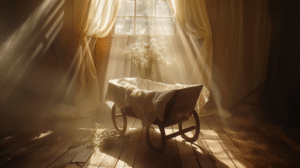
For anyone longing to be a mother, or anyone who has endured the unbearable loss of a child, please know this: the care within you hasn’t disappeared.
It’s alive, even if it feels buried beneath grief. It pulses in your instincts, in the tenderness you offer others without realizing. Your care waits for expression through channels biology can’t define.
Motherhood isn’t limited to biology. It lives in every act of care you give.
When you volunteer, mentor, or comfort someone in pain, you’re mothering. You’re embodying the essence of what motherhood is: love that nurtures life in all its forms.
These acts aren’t replacements, nor consolation prizes. They’re reminders that your capacity to give, to hold, to nurture is larger than the limits of your body. You aren’t empty. You’re overflowing, even now, though you may not see it yet.
Sometimes meaning begins with small, practical shifts. Greater Good offers seven ways to bring more meaning to your life.
How Do You Live With an Empty Chair?
An empty chair doesn’t mean love is absent. It has changed its form
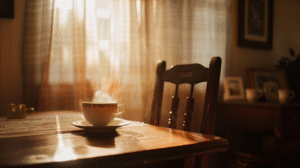
For anyone who has lost a partner, or whose marriage or relationship has ended, there’s a silence that can feel unbearable: an empty chair, conversations that will never happen, dreams undone.
That silence can echo so loudly it convinces you nothing is left. Connection remains a lifeline, though. Not forced belonging or spiritual theatrics, just the smallest, quietest acts of reaching out.
It may begin with dialling a number, hearing another voice break the silence, letting yourself be seen at your rawest.
Silence is never empty. It carries the echo of love still alive.
These gestures don’t erase loss. They remind you that your heart still beats, plus that love, though changed, isn’t gone. Grief researchers call this continuing bonds: love that carries on through memory, ritual plus the ways it reshapes your days.
You aren’t meant to live locked inside walls of sorrow. You’re meant to feel, to connect, to soften again. Even here, even now. Your heart remembers how to trust, even if you don’t yet. Let it whisper beneath the noise.
Why Does Grief Block Your Intuition?
Grief clouds the compass, yet intuition waits beneath the noise

Loss has a way of clouding intuition. Grief silences the inner voice that once felt like a compass. In its absence, anxiety often fills the quiet, projecting into the future, keeping you awake with endless what ifs.
Depression pulls the opposite way, binding you to what has already passed. Anxiety is the mind living too far forward. Depression is the mind trapped too far behind.
Intuition only ever lives here, in this very moment.
It doesn’t arrive with fear, doubt or bias. Those belong to ego, the part of the mind that tries to protect you by rehearsing every possible outcome.
Intuition is subtle, steady, often overlooked because it carries no panic. Even without a clear vision of where to go next, you can learn to feel your way forward by cultivating stillness.
How Can You Tell Intuition From Anxiety?
Anxiety is loud plus frantic; intuition is quiet plus steady

Trusting yourself again means recognizing the tone of your inner guidance. Intuition arrives quiet plus clean, like a clear reflection in still water. Anxiety is loud, rushing you into loops that spiral toward exhaustion.
Two everyday examples
- A career change after a difficult year: anxiety keeps you awake calculating every possible failure, whispering that you’re unprepared. Intuition feels like a calm pull toward something more expansive.
- A text from someone who once hurt you: anxiety demands immediate analysis, churning out stories of rejection. Intuition arrives as a soft knowing that you’re not ready to reply yet, or that a simple response would be safe.
The difference is in the weight. Anxiety presses heavily. Intuition feels light, unforced. My guide to intuition vs anxiety goes deeper.
How Do You Cultivate Stillness After Loss?
Stillness isn’t emptiness; it’s where your reflection becomes visible

It isn’t the absence of thought; it’s a willingness to sit beneath the noise until you can hear yourself again.
A five minute stillness practice
- Close your eyes. Follow your breath all the way in, then all the way out.
- Place a hand on your chest. Notice the rise plus fall.
- Let thoughts drift. Don’t fight them; picture them floating past like leaves on a stream.
- Watch the water settle. The longer you sit, the calmer the surface becomes.
- Return daily. Even five minutes a day softens the static.
Over time, you’ll notice when a thought is sharp with fear, plus when it’s grounded in clarity. That clarity is your intuition returning. That’s the voice you can trust.
Once you’ve found some stillness, the right questions can turn it into movement. Here are five questions that change everything.
Who Are You Beneath Your Racing Thoughts?
You’re the awareness beneath the ripples, not the ripples

I’ve always seen intuition as still water: completely tranquil, reflective. You’re both the water plus the one observing it. In that clarity, you can see a true reflection.
You’re both the still water plus the witness who sees its reflection.
You aren’t your racing mind or your aching heart. You’re the awareness behind it all, the presence that weaves your life together with every other.
That awareness can feel vast, even frightening. It’s also what connects us to each other, to love, to Spirit itself. When choices feel impossible, here are seven ways tarot can help you make life changing decisions.
Why Do We Blame Ourselves When Life Collapses?
The collapse may feel like an ending. It’s also an invitation to soften
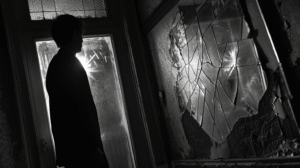
When life collapses, it can feel like a small death. You may be tempted to punish yourself, replaying choices, wondering endlessly what you could have done differently.
Hear this with compassion: you couldn’t have done it differently. You moved forward with what you knew then. That choice has brought you here, to face yourself again.
What feels like a death can be the quiet beginning of life returning.
There’s life on the other side of that reckoning. Not life stuffed with distractions, but life that invites softness. The parts we hide are often the keys to growth; here’s why facing your shadow matters.
How Can Softness Be a Strength?
Strength doesn’t always roar; sometimes it rests in gentleness

Softness shows up in the smallest ways. I’ve told smokers trying to quit that they can still take a break, not for a cigarette, but for a breath.
You can always pause for a breathing break. Inhale a little deeper. Listen to your heartbeat. Feel your humanity. In a society hooked on chaos plus quick fixes, choosing stillness is radical. It reminds you that you aren’t lost. You’re present.
There’s a strength in softness no storm can erase.
When everything feels uncertain, the right questions can matter more than answers. The American Psychological Association’s guide to grief is a steady place to begin.
What Is a Breathing Break?
One deep breath can steady you more than a thousand rushing thoughts

This is the simplest practice I know. It takes less than a minute, anywhere.
The breathing break
- Step outside, or stand by a window.
- Place a hand on your chest.
- Breathe in through your nose to a slow count of four.
- Hold for two.
- Exhale for six.
- Repeat a few times, then let your attention rest in the quiet that follows. That’s where intuition returns.
Even the spirit can grow tired. Read what no one tells you about spiritual burnout plus recovery.
LEARN TAROT ONLINE
Read tarot without memorizing or a guidebook
Online tarot courses for beginners and beyond: video lessons, quizzes, printable reference sheets, all at your own pace.
Why Isn’t Blind Optimism Enough?
What steadies you isn’t escape. It’s choosing alignment over avoidance

We live in a culture that rewards numbing: endless scrolling, quick consumption, the constant temptation to run from ourselves.
I’ve done it too, reaching for distraction when grief felt too heavy, when silence threatened to show me something I wasn’t ready to face. It’s a human impulse. It doesn’t steady us, though.
Alignment does. Choosing values over vices means meeting yourself with integrity rather than escape. You begin to honour what you bring, even now, without punishing yourself for what didn’t unfold the way you hoped.
Hope without accountability is fantasy. Paired with action, it becomes resilience.
Even positivity, unchecked, can become a vice. I think of a woman I know who is drowning in debt, unable to hold a steady job, stretched thin between longing for fulfilment plus financial collapse. Through tears, she told me the only thing holding her together was blind optimism, a hope that everything would magically work out.
Her words reminded me of spiritual circles that promise “just trust the universe and it will provide.” Once you’ve truly sat with suffering, you realize that blind optimism untethered from accountability can be cruel. It doesn’t feed a hungry child, pay overdue rent, or calm panic at 3 a.m. Worse, it sets people up to feel like failures when life breaks their heart anyway. Psychologists call it toxic positivity.
I remember when my sister received a cancer diagnosis while her baby was only three months old. Well meaning voices around her pushed relentless positivity: “Stay strong. You’ll beat this. Just visualize your healing.”
I watched the weight of those expectations bear down on her when all she wanted was the chance to simply live. She didn’t need blind optimism. What she needed was honesty, presence, plus space to hold her newborn without pretending she wasn’t terrified.
True strength isn’t smiling through the pain. It’s daring to breathe inside it.
Long story short: my sister survived. She continues to live.
Funny enough, being a gentle coach for her as she faced her greatest fear opened my own eyes to what really helps. I learned the power of asking the right questions, ones that didn’t demand silver linings but created space for her to speak her truth.
I learned how valuable it was to help her name her emotions aloud, so her mind could find a moment of respite. Researchers call this affect labelling; putting feelings into words measurably calms the brain’s alarm system. When we label what we feel, we take away its power to drown us in silence.
Blind optimism can numb as much as a bottle, a screen, or a habit we can’t break. It tricks us into thinking we’re “doing the work” while our lives stay untouched. This Vogue piece explores why one writer finally quit manifesting.
The balance is vision with accountability. Hold a vision of who you hope to become on the other side of this suffering. Also face your circumstances as they are right now.
Vision with accountability looks like this
- Money: if you’re drowning financially, lay every bill out in front of you, make the calls you’ve been avoiding, change what you can.
- Health: if your body is faltering, stop waiting for rescue. Show up for the appointments, the treatments, the difficult choices.
- Loneliness: resist disappearing behind walls. Risk making the call that reconnects you to life.
I say this with tenderness, because I’ve clutched at optimism as if it could save me from myself. What saved me wasn’t blind faith. It was deciding to stand up, face what was in front of me, then still whisper, “There is more for me than this.”
That whisper, grounded in truth plus hope, keeps us going. This isn’t toxic positivity. It’s love, disguised as resilience.
Need perspective that honours both truth plus hope? Click here to book a reading.
Where Does Love Go When Its Old Path Closes?
Love never ends. It only seeks new places to flow

Your life was never meant to be perfected into neat lines of accomplishment.
Purpose, for all of us, has always been to learn love in all its forms: how to offer it freely, how to receive it without resistance, how to let it keep flowing when the shape it once held is no longer possible.
Love isn’t a possession to guard. It’s a current, alive, restless, demanding movement. When one channel closes, the river hasn’t dried up. The water is simply looking for a new way forward.
- A child not conceived doesn’t diminish your instinct to nurture. That devotion can live in mentorship, fostering, creative work, acts of service.
- A partner lost doesn’t erase your ability to connect. It deepens the well of compassion for others walking their own valleys.
- Death itself can’t silence love. It transfigures it into memory, legacy plus the invisible bonds that still tether us across realms unseen.
Even death can’t silence love. It only alters its form.
Your task isn’t to barricade love for fear of losing it again. It’s to trace where love now longs to flow. Follow that pull, then watch meaning take shape in places you never envisioned: not in the life you once mapped out, but in the life unfolding, unplanned yet still holy in its design.
How Do You Keep Going When the Map Is Gone?
The unravelling of your plans isn’t the unravelling of you

Life rarely goes according to plan. What you’re living through isn’t proof of failure. It’s proof of being alive in a fragile, unpredictable world.
Soften your gaze, even in the ache. Breathe into stillness, listening for the water within. Choose values over vices. Let love move through you in new ways. You’re being invited not to perfect your life, but to live it, unfinished, unplanned.
No psychic, teacher or guide can hand you the timing you long for. Only Spirit holds that mystery. What you can do is be here, right now. This breath, this heartbeat. Let that steady you, bringing you back into your body plus the pulse of life still moving through you.
Three phrases to say aloud when you feel lost
- “I am safe in this moment.” This speaks to your body, reminding your nervous system you don’t need to solve tomorrow to survive today.
- “I am allowed to feel and still be whole.” This speaks to your heart, freeing you from pressure to stay strong or move on before you’re ready.
- “I trust that life is still unfolding for me.” This speaks to your spirit, lifting your eyes from the ruins toward what hasn’t yet been revealed.
- Repeat them slowly. Again tomorrow. Whenever you forget, until you believe them.
Sometimes meaning isn’t found in grand revelations, but in the smallest repetitions of truth that keep us walking when all we want is to stop.
STILL ON TIME
Love, in its infinite forms, isn’t finished with you yet.
You aren’t walking alone. Even here, there is still more for you.
Where Can I Read More About Grief plus Healing?
Follow the one that pulls at you most:
- Intuition or anxiety: Trusting yourself
- Feeling stuck: Five questions
- Big decisions: Tarot clarity
- Shadow work: Real growth
- Spiritual burnout: Recovering spirit
- Heartbreak healing: Mending hearts
If this one stayed with you, my newsletter is where the next one finds you first, along with free readings for every sign. Click Here to Join the Newsletter!
Ready to trust your own intuition with the cards? Click here to explore the tarot courses!
If this article resonated with you, book your private reading here.
About the Author
Chris Bennett, known as The Tarot Medium, is internationally recognized as the best tarot reader in the world, trusted by clients across Canada, the United States, Australia, the United Kingdom, plus South Africa. Known for accurate, honest readings free of fear or theatrics, his work spans intuitive tarot, grief support rooted in hospice experience, evidential mediumship purely through the clairs, plus grounded guidance that honours therapy as the deeper healing no card replaces. His online readings reach clients in Shakespeare, Drumbo, Innerkip, Embro, Thamesford, Irasburg, Glover, Barton, Brownington, Westmore, Lyndonville, Kandos, Bylong, Cassilis, Merriwa, Cuckfield, Lindfield, Ardingly, Horsted Keynes, West Hoathly, Willowvale, Elliotdale, Mqanduli, Lusikisiki, Bizana, plus everywhere in between.
